If you have a body mass index (BMI) of 33 or higher and loose abdominal skin that diet and exercise can’t fix, a plus size tummy tuck (also called high BMI abdominoplasty) can safely remove excess tissue, tighten weakened muscles, and restore a more proportional contour. Success depends on choosing a board-certified surgeon experienced with higher BMI cases and committing to realistic expectations about results and recovery.
Why Tummy Tuck Candidacy for High BMI Has Changed
For years, many plastic surgeons used BMI 30 as a hard cutoff for tummy tuck eligibility. That approach is shifting.
Data from the American Society of Plastic Surgeons shows that over 170,000 tummy tucks were performed in 2023, representing a 5% increase from the previous year. Tummy tuck remains one of the top five cosmetic surgical procedures in the United States.[^1] A growing subset of these patients present at higher BMIs following significant weight loss.
Research published in Plastic and Reconstructive Surgery found that abdominoplasty can be safely performed in obese patients with no statistically significant increase in complications compared to non-obese patients when proper patient selection criteria are followed.[^2] A 2023 study from the University of Pennsylvania found no increased risk of surgical site occurrences, cosmetic complaints, or reoperations in overweight or obese patients compared to normal weight patients undergoing cosmetic abdominoplasty.[^3]
Not every plus size patient is a candidate. But blanket BMI restrictions often exclude people who could benefit safely from the procedure.
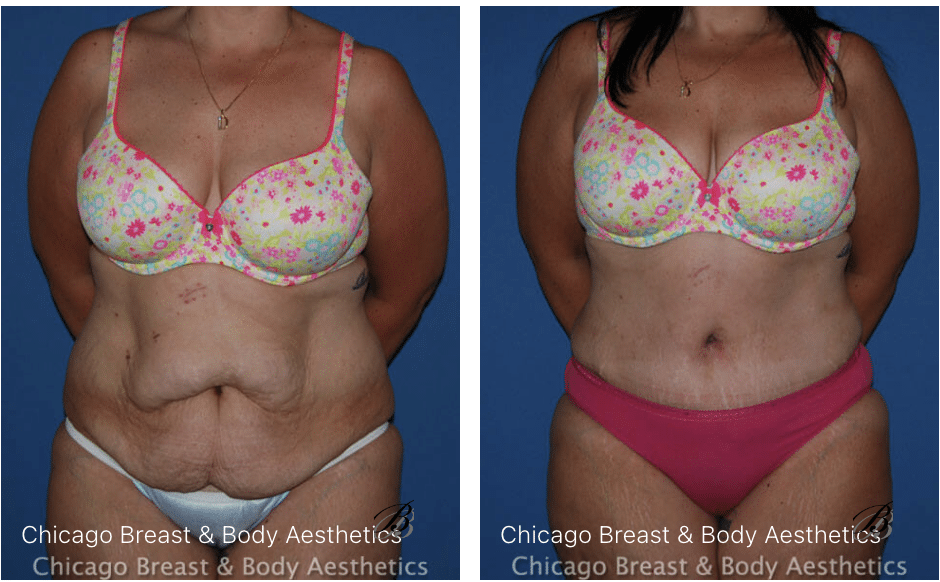
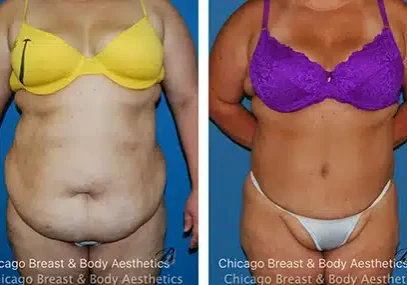
Plus-Size Abdominoplasty – Case #95
This patient presented after a 50lb weight loss resulting in a significant amount of loose skin and fatty tissue. Dr. Truong performed a full Tummy Tuck with removal of excess skin, tightening of the muscles, and re-construction of the belly button. This patient is 3 months post op.
What is a High BMI Tummy Tuck?
A high BMI tummy tuck is an abdominoplasty performed on patients with a BMI of 33 or higher who have excess abdominal skin, fat, and often muscle separation (diastasis recti) that has not responded to lifestyle changes.
How it differs from standard abdominoplasty:
- Longer incisions may be needed to address a larger pannicular area
- More tissue is typically removed (often 3-8 pounds of skin and fat)
- Muscle repair (rectus plication) addresses the bulging many higher BMI patients experience
- Surgical time is often 30-60 minutes longer
- Drains may be used for a longer duration post-op
How it differs from standard abdominoplasty:
- Removal of excess skin from the lower abdomen
- Liposuction of the flanks and lower back when needed
- Tightening or repair of separated abdominal muscles
- Reconstruction of the belly button position
- Layered closure to minimize tension on the incision
Who Qualifies for a High BMI tummy tuck?
A good candidate for a plus-size abdominoplasty procedure is someone who is significantly overweight with a BMI of 33 or more, and has excess fat and/or skin in their abdominal area that is not responding to diet and exercise. The ideal candidate should have realistic expectations and be willing to commit to a healthy lifestyle before and after surgery for the best results.
If you meet the following criteria, then you may be a candidate because these factors correlate with safer surgical outcomes and better results:
| What We Look For | What We Look For |
|---|---|
| BMI between 33-40 | Higher BMIs increase complication risk |
| Stable weight for 3-6 months | Weight fluctuation affects skin quality and surgical planning |
| Non-smoker or quit 6+ weeks prior | Smoking impairs blood flow and healing |
| No uncontrolled diabetes | Blood sugar management affects wound healing |
| Functional limitation from panniculus | Medical necessity may support candidacy even at higher BMIs |
| Realistic expectations | Understanding this is contouring, not weight loss surgery |
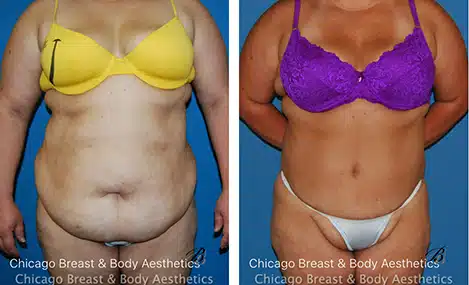
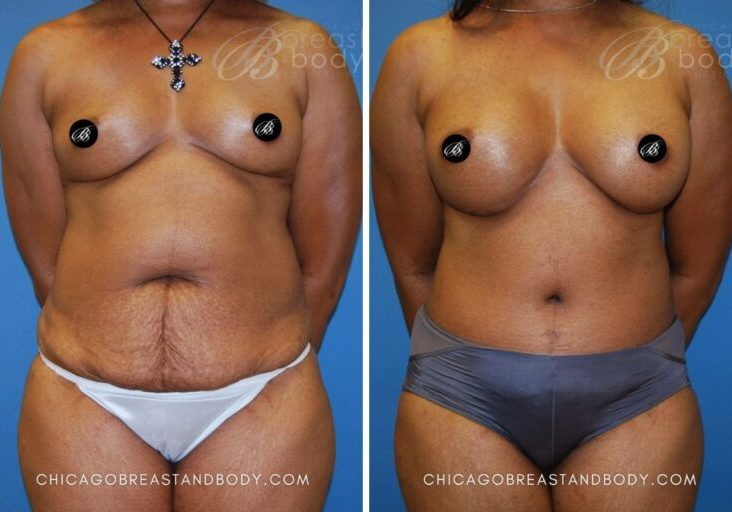
Plus-Size Abdominoplasty Tummy Tuck – Case #197
This patient presented with a severely protuberant abdomen with excess skin, fat, and muscle weakness. Although it was recommended she lose additional weight, she elected to proceed with a Tummy Tuck due to the debilitating nature of her panniculus. She is seen here 8 months post op following Full Tummy Tuck with rectus plication.
Three Things Most Surgeons Don’t Tell Higher BMI Patients
1. Your tissue quality matters more than your BMI number.
A patient at BMI 35 with good skin elasticity and minimal visceral fat may be a better candidate than someone at BMI 31 with poor tissue quality and significant internal fat. The consultation exam reveals more than the scale.
2. Staged procedures sometimes produce better outcomes.
If you have a very large pannus or significant back and flank excess, your surgeon may recommend addressing areas in separate surgeries. This reduces operative time, lowers complication risk, and often produces better contouring than trying to do everything at once.
3. The panniculus weight removal can improve your BMI post-surgery.
Patients often lose 3 to 8 pounds of tissue during a plus size tummy tuck. While this is not the goal of surgery, it can shift your BMI category and improve mobility, which supports long-term health habits.
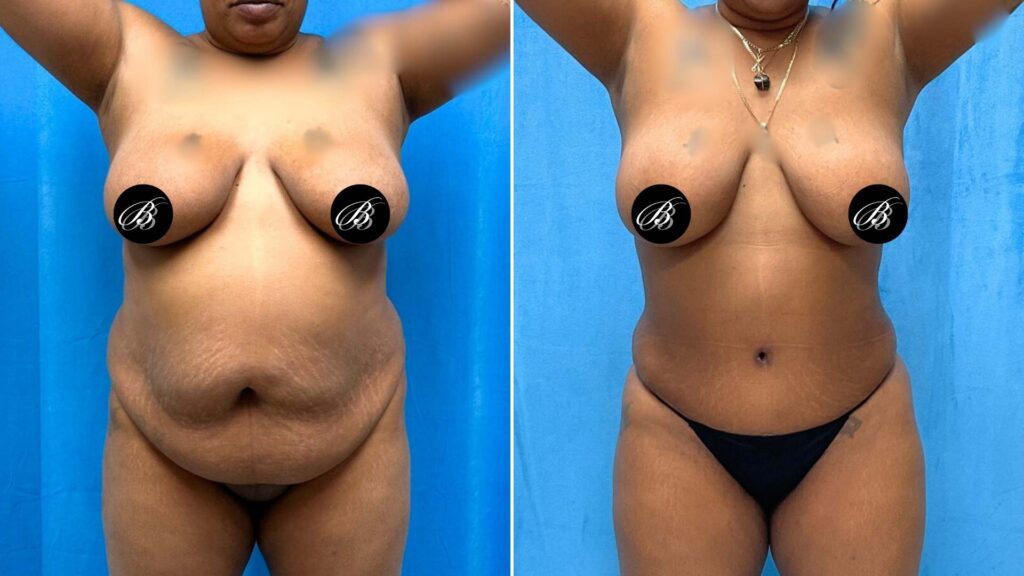
Plus-Size Abdominoplasty Tummy Tuck – Case #2273888
This is a 38 y/o female presenting in consultation for improvement of abdominal contour. The patient is concerned with the loss of
her waistline, excess hanging skin and striae of the abdominal wall as well as excess fat on her flanks. She is seen here 3 months post op following Full Tummy Tuck with liposuction.
How is a tummy tuck for plus-Size Patients performed?
During this procedure, excess fat often located on the lower abdomen, flanks, and lower back will be removed, while abdominal muscles may be tightened or repaired to create a smoother, sleeker look. A plus-size abdominoplasty can help create a more flattering figure and additional confidence in individuals who have excess abdominal fat and skin.
What the Research Shows About Complication Rates
Understanding the real data helps set appropriate expectations. Here is what studies have found when comparing outcomes between non-obese and obese patients:
Seroma (fluid collection): This is the most common complication across all BMI groups. Rates run around 14-20% in non-obese patients and 20-25% in obese patients. Most are managed with simple drainage in the office.[^2]
Minor complications: These are issues that can be handled in an office setting – things like small wound separations or minor infections. Studies show rates of 10-18% in non-obese patients and 27-39% in obese patients.[^4]
Major complications: These require a return to the operating room. Rates are actually similar between groups – around 6-9% for non-obese patients and 8-9% for obese patients.[^4]
Patient satisfaction: This is where the data gets interesting. Despite the higher complication rates, 97% of overweight and obese patients said they were satisfied with their results and would choose to have the procedure again.[^4]
Complications are somewhat more common in plus size patients, but they are usually minor and manageable. And patients overwhelmingly feel it was worth it.
Choosing a Surgeon for High BMI Abdominoplasty
- Board certification by the American Board of Plastic Surgery (ABPS) or American Board of Cosmetic Surgery (ABCS)
- Hospital privileges to perform the procedure
- Before and after photos of patients with similar BMIs to yours
- Clear explanation of their complication rates
Weight loss patients may benefit from a full abdominoplasty if their abdominal area has not returned to its pre-weight-loss state, or if excess fat and skin remain. It’s important to note that a plus-size abdominoplasty does not address any existing health conditions or eating habits, and that proper nutrition and lifestyle habits must continue to be followed for optimal results.
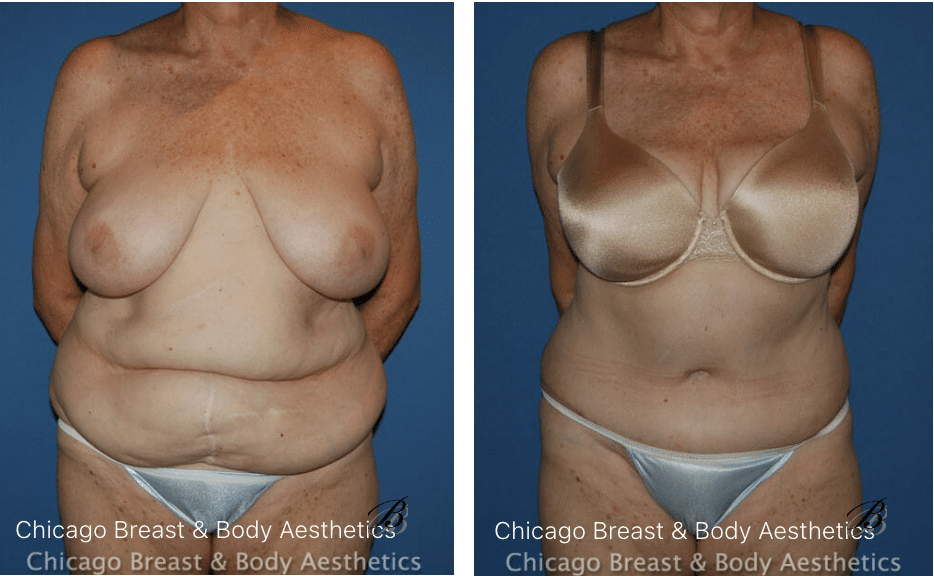
Plus Size Abdominoplasty Tummy Tuck – Case #94
This patient presented with excess loose skin, fatty tissue, and muscle bulging of the abdominal area. Dr. Truong performed a full Tummy Tuck (Abdominoplasty) with removal of excess skin, fat, and tightening of the abdominal muscles as well as re-creation of the belly button. The patient is seen here 3 months post-op.
Schedule a Consultation Today
If you are considering a plus size tummy tuck and want an honest assessment of whether you are a good candidate, schedule a consultation at Chicago Breast and Body Aethetics.
Contact us online today or call our Chicago, Illinois office at (312) 846-1529
About our surgeons
Dr. Anh-Tuan Truong is a triple board-certified cosmetic surgeon, certified by the American Board of Surgery, the American Board of Cosmetic Surgery, and the American Board of Facial Cosmetic Surgery.
He also serves as the fellowship director and founder of an AACS-certified cosmetic surgery fellowship program, training other surgeons. American Academy of Cosmetic Surgery
Dr. Pey-Yi Kevin Lin is board certified in Plastic and Reconstructive Surgery by the American Board of Plastic Surgery (ABPS) and is a member of the American Society of Plastic Surgeons (ASPS). His training includes a general surgery residency (University of Illinois Chicago Metropolitan Group Hospitals) and a plastic and reconstructive fellowship (University of Texas Health Science Center at Houston), and he holds hospital privileges locally.
High BMI Tummy Tuck Frequently Asked Questions
What BMI is too high for a tummy tuck?
Most surgeons consider BMI above 40 higher risk for complications. Between 33-40, candidacy depends on overall health, tissue quality, and surgical goals. A consultation determines your individual eligibility.
Is a tummy tuck safe for plus size patients?
Yes, when performed by experienced surgeons on appropriately selected patients. Studies show complication rates are manageable when patient selection criteria are followed and surgical techniques are adapted for higher BMIs.
How much does a plus size tummy tuck cost?
Costs typically range from $15,000 or more depending on the extent of the procedure, whether liposuction is included, and your geographic location.
Will I have loose skin after losing more weight post-surgery?
If you lose significant additional weight after your tummy tuck, some skin laxity may return. Most surgeons recommend being at or near your goal weight and stable for 3-6 months before surgery.
How long is recovery for a high BMI tummy tuck?
Plan for 2-3 weeks off work for desk jobs, 4-6 weeks for physical jobs. Full activity resumes around 6-8 weeks. Final results are visible at 6-12 months as swelling resolves.
Footnotes
Laspro M, Cassidy MF, Brydges HT, et al. “The Impact of Body Mass Index on Adverse Outcomes Associated with Panniculectomy: A Multimodal Analysis.” Plastic and Reconstructive Surgery. 2024;154(4):880-889. https://pubmed.ncbi.nlm.nih.gov/37921622/ ↩
American Society of Plastic Surgeons. “Plastic Surgery Sees Steady Growth Amidst Economic Uncertainty, American Society of Plastic Surgeons 2023 Procedural Statistics Report Finds.” June 2024. https://www.plasticsurgery.org/news/press-releases/plastic-surgery-sees-steady-growth-amidst-economic-uncertainty-american-society-of-plastic-surgeons-2023-procedural-statistics-report-finds ↩
Batac J, Hamade M, Hamade H, Glickman L. “Abdominoplasty in the Obese Patient: Risk versus Reward.” Plastic and Reconstructive Surgery. 2019;143(4):721e. https://www.plasticsurgery.org/news/press-releases/no-increase-in-complications-with-tummy-tuck-in-obese-patients ↩ ↩2 ↩3 ↩4
Davis HD, Habarth-Morales TE, Messa CA, et al. “The Impact of Body Mass Index on Surgical and Aesthetic Outcomes in Cosmetic Abdominoplasty.” Plastic and Reconstructive Surgery Global Open. 2023;11(5 Suppl):51. https://www.ncbi.nlm.nih.gov/pmc/articles/PMC10194602/ ↩ ↩2
Hammond DC, et al. “Abdominoplasty in the Overweight and Obese Population: Outcomes and Patient Satisfaction.” Plastic and Reconstructive Surgery. 2019;144(4):847-853. https://www.plasticsurgery.org/news/press-releases/tummy-tuck-improves-quality-of-life-in-overweight/obese-patients ↩ ↩2 ↩3 ↩4