
★★★★★ 700+ five-star reviews across Google, RealSelf & Healthgrades
Breast Augmentation in Chicago: Natural but noticeable, sized for your frame
Silicone or saline, over or under the muscle, and the size that fits your body. Dr. Truong or Dr. Lin will tell you when a smaller implant suits you better.
Complimentary virtual consultation. Regularly $250.
Board-certified surgeons Dr. Anh-Tuan Truong and Dr. Kevin Lin. AAAHC-accredited surgical facility, on site.
See before & after photos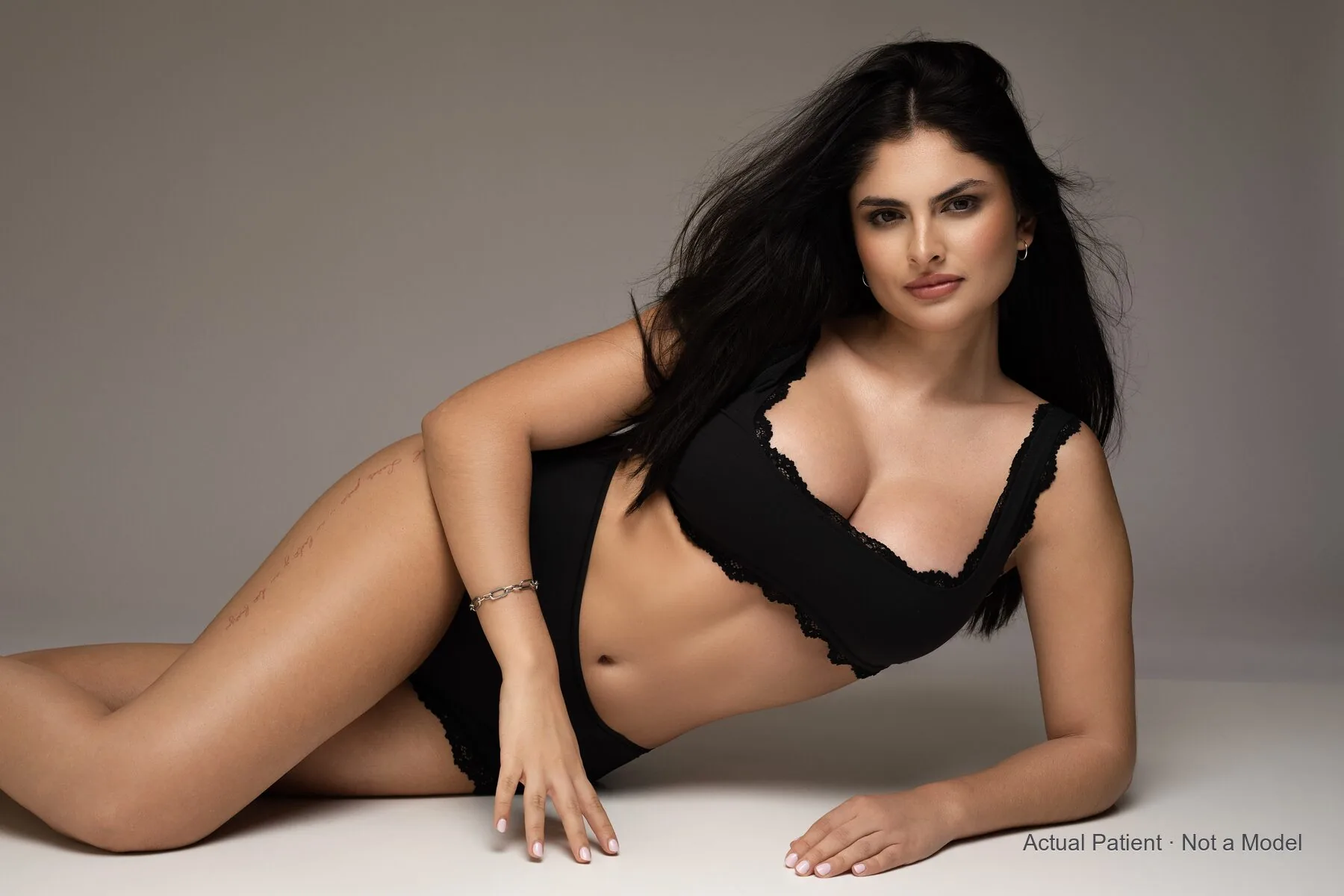
Updated
What is breast augmentation?
Breast augmentation is a cosmetic surgery that adds volume and shape to the breasts using silicone or saline implants, or in some cases your own transferred fat. It suits women who want more fullness, better balance between the breasts, or restored volume after pregnancy or weight loss. It takes one to two hours, you go home the same day, and most patients return to desk work in about 7 to 10 days.
Individual results may vary.
The implant is placed either above or beneath the chest muscle, under general anesthesia, as an outpatient surgery. It does the work of adding size. It does not lift tissue that has descended.
That distinction matters more than most patients expect. Augmentation adds fullness. It does not raise the position of the breast on your chest, and it does not tighten skin that has stretched. If your concern is that your breasts sit lower than they used to, the honest answer may be a lift, an augmentation with a lift, or neither. Your surgeon will say so at the consultation rather than after it.
You may also hear it called a boob job or an augmentation mammoplasty. All three names describe the same operation. Many patients come to it after pregnancy, breastfeeding, weight loss, or the changes that come with age, when the goal is less about adding something new than about restoring what was there.
There is also a non-implant option. Fat transfer to the breasts uses liposuction to harvest your own fat and place it into the breast, which produces a modest increase in size with no implant to maintain. It suits a narrower set of goals than an implant does, and we will tell you honestly which one your goal points toward.
Who will perform your surgery?
Two surgeons perform breast augmentation at Chicago Breast & Body, and you will meet the one who will operate on you before you commit to anything. Neither of them runs a general practice where breast surgery is one item on a long menu. Both do this procedure regularly, which is the difference patients feel in the sizing conversation more than anywhere else.
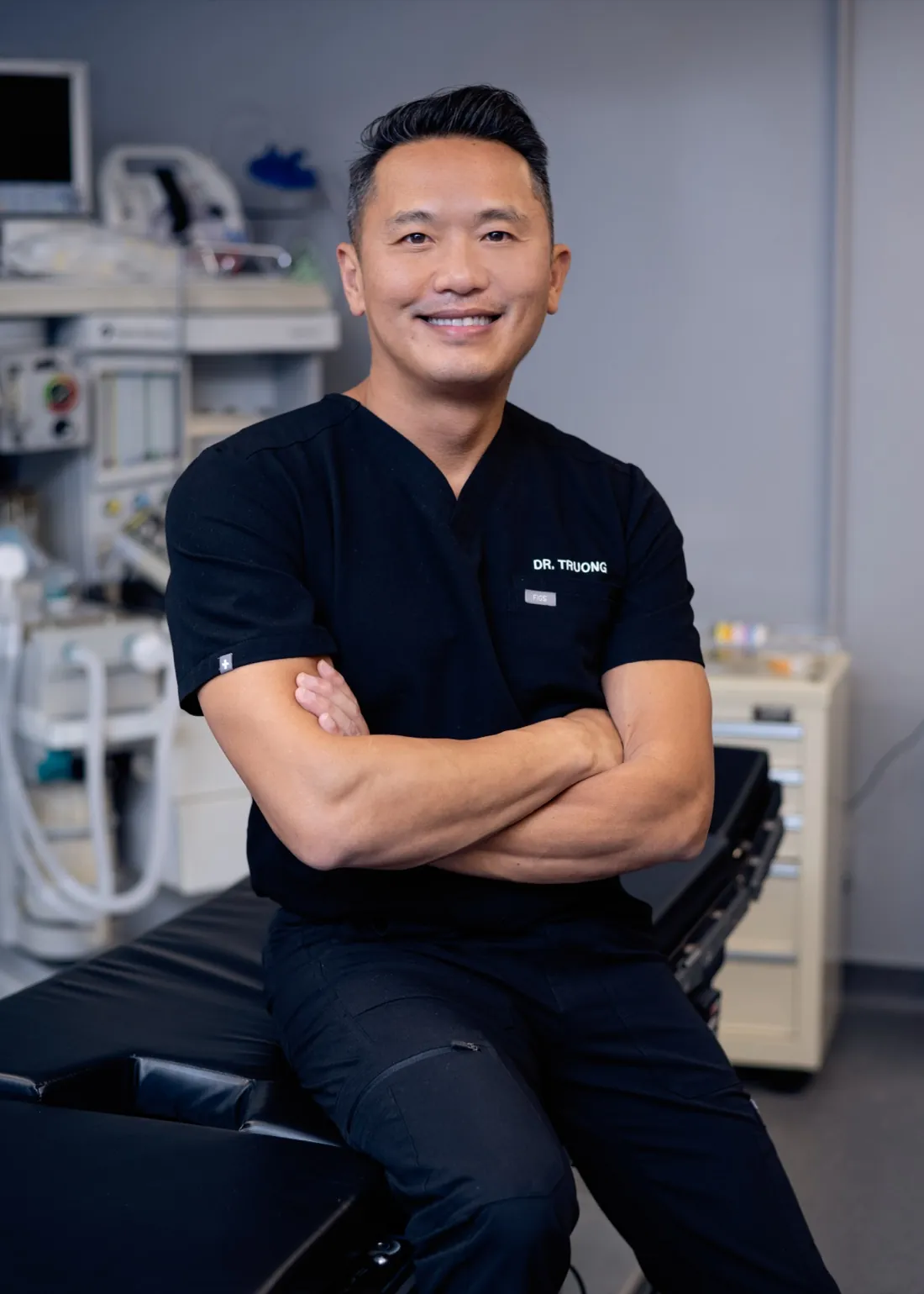
Dr. Anh-Tuan Truong, MD, FACS, FAACS
Triple board-certified cosmetic surgeon
Dr. Truong is a triple board-certified cosmetic surgeon, certified by the American Board of Surgery, the American Board of Cosmetic Surgery, and the American Board of Facial Cosmetic Surgery. He directs a fellowship that trains the next generation of cosmetic surgeons, which means he teaches this work as well as performs it. Read his full bio.
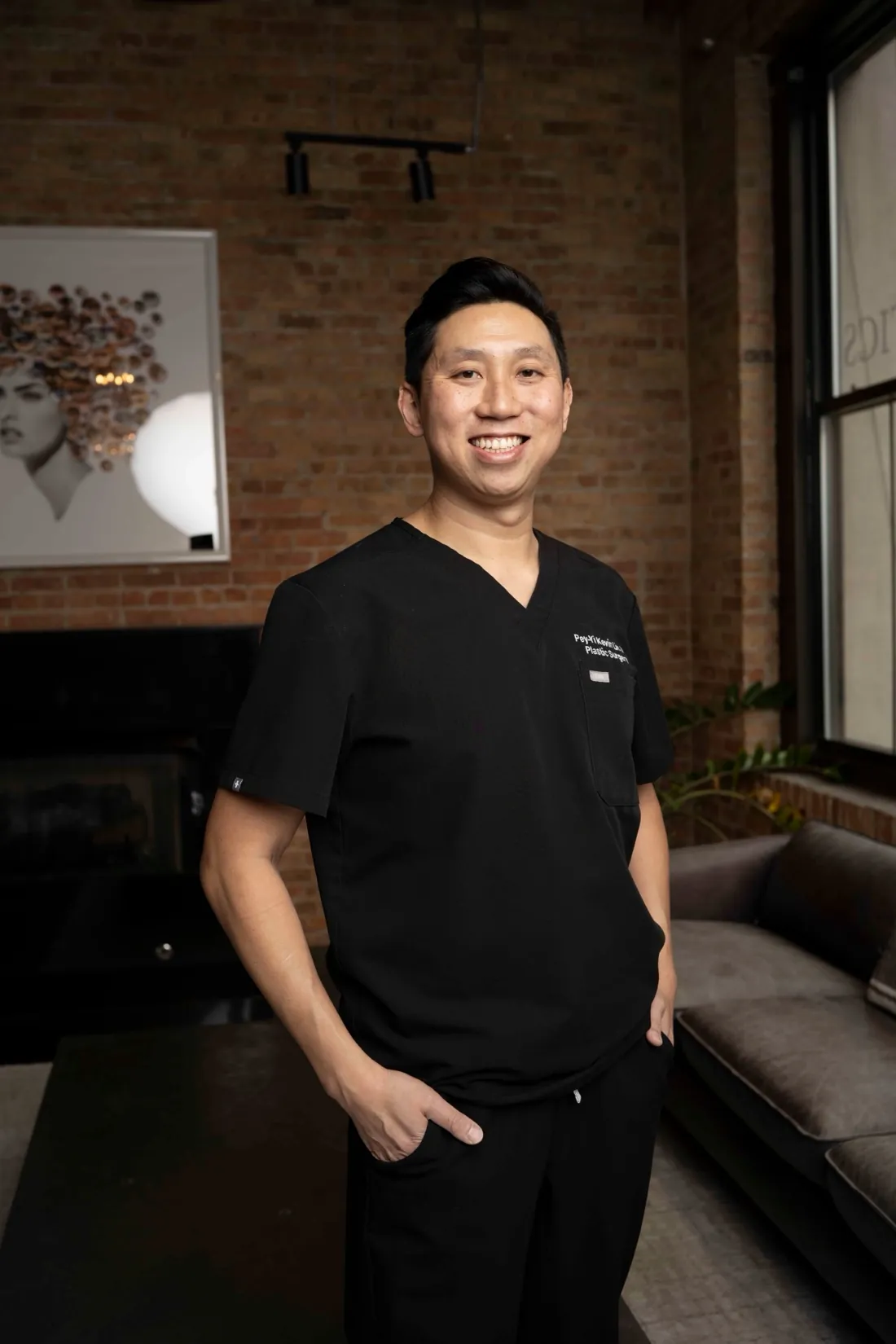
Dr. Kevin Lin, MD
Board-certified plastic surgeon
Dr. Lin is a board-certified plastic surgeon, certified by the American Board of Plastic Surgery. His focus is body contouring and breast surgery, with a consistent emphasis on results that read as natural on the patient’s own frame. Read his full bio.
Surgery is performed in our AAAHC-accredited surgical facility on site. You can meet the full surgical team here.





“I wanted a very natural look and Dr. Truong explained in detail how he was going to accomplish what I wanted. I felt very comfortable moving forward with the surgery…”
Shari M., breast augmentation with Dr. Anh-Tuan Truong, Google review. Actual patient. Individual results may vary.
Are you a good candidate for breast augmentation?
You are likely a good candidate if you are in good general health, at a stable weight, and want more volume or better balance between your breasts. Most patients are done having children, though that is a preference rather than a requirement. What matters most is that your goal is something an implant can actually deliver.
This procedure tends to suit you if
- You want more fullness in the upper part of the breast, particularly in clothing.
- Your breasts differ noticeably in size and you want closer symmetry.
- You lost volume after pregnancy, breastfeeding, or weight loss and want it restored.
- Your breasts feel small relative to your hips and shoulders, and you want proportion rather than size.
- You are at least 18 for saline implants or 22 for silicone, the ages the FDA approved them for in cosmetic augmentation.
- You are at a stable weight and expect to stay there.
- You are a non-smoker, or willing to stop, and your expectations are realistic.
This procedure is not the right answer if
- Your main concern is that your breasts sit low on your chest. That is a lift, not an implant, and adding volume to descended tissue usually makes the position more obvious rather than less.
- You are pregnant, breastfeeding, or planning a pregnancy in the near term. Pregnancy changes breast tissue after surgery, and it is worth waiting.
- You are still actively losing weight. A significant change after surgery will change your result.
- You smoke and are not willing to stop for the period your surgeon specifies. Smoking measurably affects healing.
- You are considering this because someone else wants you to. Every good outcome we see starts with the patient wanting it for herself.
If you land in the second list, that is worth knowing now rather than three months from now. The consultation exists to sort this out honestly.
Find out which category you are in.
Book a complimentary virtual consultation, regularly $250, and get a straight answer about whether an implant is the right procedure for your goal.
No pressure, and no obligation to book surgery.
Before and after with Dr. Truong
The same patient before surgery and three months after, photographed from the same angle. Drag the line across the photo to compare.

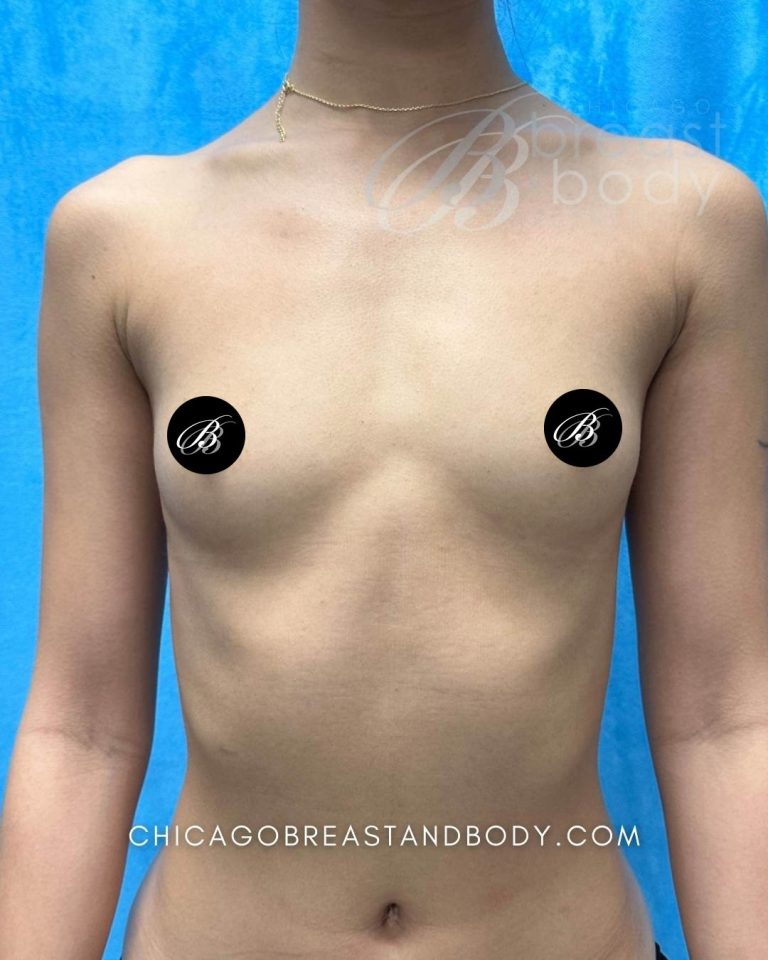 BeforeAfter
All photos are actual patients of Chicago Breast & Body Aesthetics, shown with nipples covered for privacy. Individual results may vary.

Surgeon-guided sizing
How is your implant size chosen, and how does it stay natural-looking?
Your surgeon recommends a size based on your chest width, your existing tissue, and where you want to end up, then shows you what that looks like before you commit. You do not choose a number from a chart. This is the single most common place where patients arrive with one idea and leave with a better one.
Why we push back on size, and why patients thank us for it
The most frequent thank-you we receive after breast augmentation is not for going bigger. It is for recommending a size that suited the patient’s frame when she came in asking for something larger. An implant that is too wide for your chest does not read as fuller. It reads as shape that does not belong to you, and it puts long-term strain on the tissue holding it.
This is what patients mean when they say natural but noticeable. They do not mean invisible. They mean no one has to know unless she chooses to tell them. It is also why more patients now ask us about smaller implants than used to.
What looks natural actually depends on
Implant width against your chest width.
The strongest single factor, and the one patients rarely think about.
Your existing breast tissue.
More tissue covers an implant edge better and gives more options.
Placement above or beneath the muscle.
This changes the upper slope of the breast more than size does.
Implant profile.
How far the implant projects forward at a given width.
Size is one of four variables, and it is not the most important one. That is the conversation the consultation is for.
How sizing actually happens at your consultation
Dr. Truong or Dr. Lin measures your chest width and assesses your existing tissue, then walks you through sizers so you can see the difference between options on your own body rather than on someone else’s photograph. You leave the consultation having seen the recommendation, not just heard a number.
Most patients at our practice ask for a natural but full look rather than an overdone one. If you are starting with a small chest, the process is the same: your chest width and existing tissue set the range, and the implant is chosen within it.
Want to see what a number looks like on a real body? Browse our 275cc implant photos, 300cc implant photos, 350cc implant photos, 375cc implant photos, 400cc implant photos and 450cc implant photos. Treat them as a starting point, since the same cc reads differently on different frames.
Individual results may vary.
Silicone vs saline implants, and over or under the muscle
Most patients at our practice choose silicone implants placed partially beneath the muscle, because that combination gives the most natural feel for the widest range of body types. It is not the only right answer. Each choice carries a real trade-off, and the honest version of this comparison includes what each option costs you.
Silicone
Filled with cohesive gel and feels closer to breast tissue, which is why most patients choose it.
The trade-off: monitoring. Because a silicone implant holds its shape if the shell tears, a rupture can go unnoticed, so your provider may recommend regular MRI or ultrasound exams, which insurance may not cover.
Saline
Filled with sterile salt water after placement, which allows a smaller incision and makes a rupture obvious, since the implant visibly deflates and the fluid is harmlessly absorbed.
The trade-off: feel. Saline is firmer and, in patients with less natural tissue, the implant edge is more likely to be visible or palpable.
Beneath the muscle
Adds a layer of coverage over the top of the implant, which softens the upper slope and lowers the chance of a visible edge.
The trade-off: a longer initial recovery, because the muscle has been lifted, and some patients notice movement in the breast when they flex hard.
Above the muscle
A shorter recovery and no flex distortion, and it suits patients who already have enough tissue for coverage.
The trade-off: with thinner tissue, the implant is more likely to show its edge over time.
The implants we use
Silicone gel implants are made of a cohesive gel that mimics natural breast tissue in the way it feels and behaves. It is not a liquid, so even if the shell ruptures the gel does not flow out. Cohesive gel is also less likely to show rippling, which can be a problem in very thin patients.
You may have heard of gummy bear implants. That is the nickname for form-stable implants, which use a firmer gel that, per the American Society of Plastic Surgeons, can hold its shape even when the shell is cut open. Ask your surgeon how the implants we offer compare.
We offer two implant families, and your surgeon will recommend one based on your goals, your anatomy, and how you want the result to behave day to day.
Natrelle® by Allergan. A long-established silicone gel family with a wide range of profiles and base widths, suited to patients who want predictable upper-pole fullness and a structured shape.
Motiva®. A smooth-surface silicone gel family. The two options we most often compare are SmoothSilk® Round, designed to hold a consistently rounder, fuller shape including upper fullness, and SmoothSilk® Round Ergonomix®, designed to adapt with movement and position for a softer, more natural slope when you are upright.
Which family suits you is a conversation about how you want to look standing up, not only how you want to look in a mirror. We compare them side by side at your consultation against your base width, your chest dimensions, and your tissue quality.
Read the full comparison: Motiva breast implants in Chicago.
Incision placement
There are three main incision approaches, each with its own advantages. Our guide to breast augmentation incision types covers them in more depth, and caring for your incisions covers healing.
- Inframammary, under the breast. Made in the natural crease beneath your breast. The most common approach, because it gives surgeons the best access and control during placement. The scar typically heals well and is hidden in the natural fold.
- Periareolar, around the nipple. Follows the edge of your areola where the darker skin meets the lighter breast skin. A good option if you want the scar to blend with the natural color change, but it is not suitable for everyone, particularly with smaller areolas, and it carries a somewhat higher chance of affecting breastfeeding.
- Transaxillary, through the armpit. Places the incision in your armpit crease, so there is no scar on the breast itself. It can be more technically challenging and may limit implant options. Some surgeons use an endoscope to assist with placement.
Dual plane, and how long implants last
Most patients do best with a submuscular or dual-plane placement, where the upper part of the implant sits beneath the muscle for extra coverage. Dr. Truong and Dr. Lin are trained in every approach and recommend one based on your anatomy.
Every one of these choices is made with you at the consultation, not for you afterward. Implants are also not lifetime devices, and how long breast implants last is worth understanding before you decide.
Breast augmentation before and after photos
Our gallery is organized so you can find patients built like you rather than scrolling through everyone. Filter by procedure and look for a starting point close to your own, because a result is only useful to you if the body it started on resembles yours.


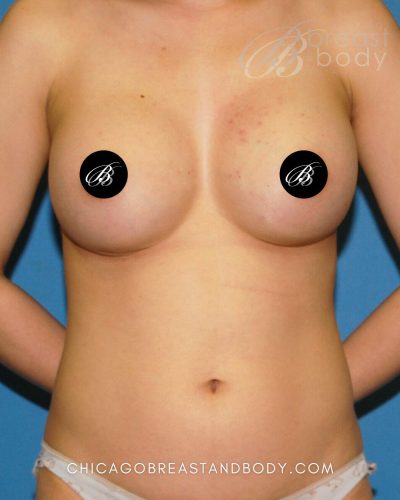
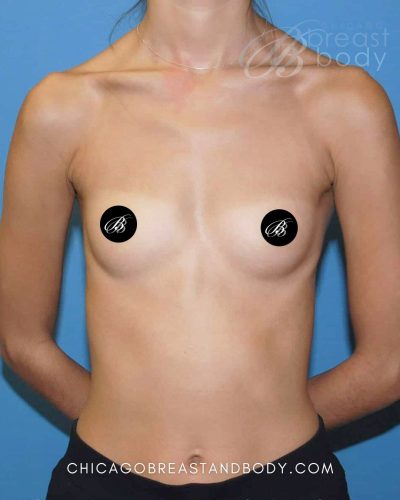
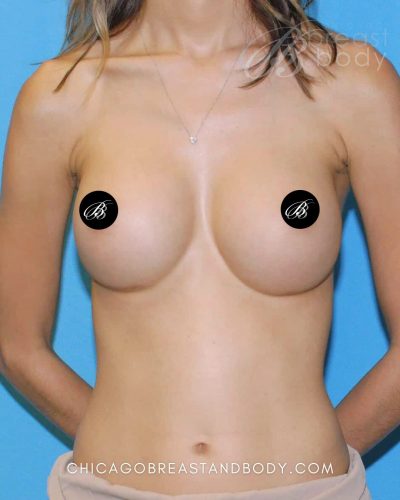


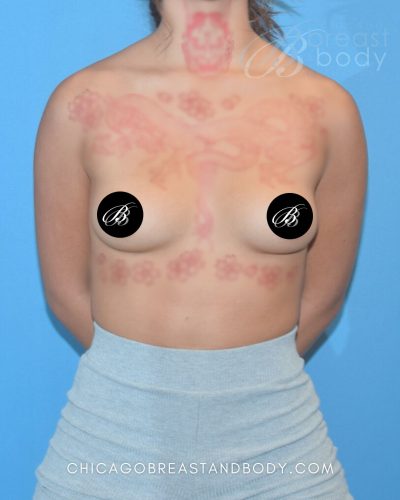

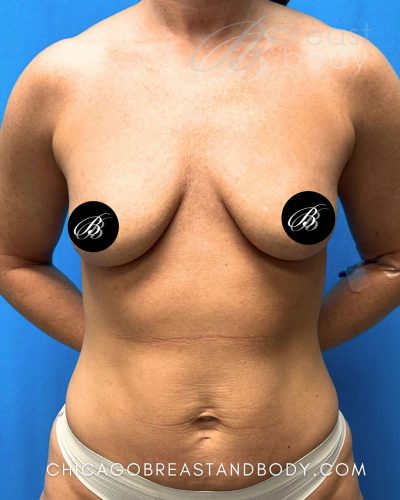
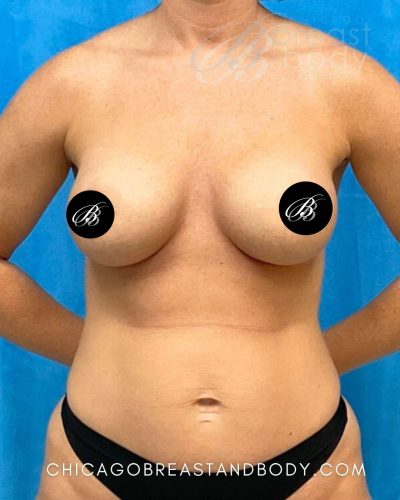
Individual results may vary. Photos are of actual patients and are published with consent.
What breast augmentation patients say about Dr. Truong and Dr. Lin
★★★★★
“I’m in my mid-50s. … If you’re hesitating because you don’t want to look “too much,” or you’ve waited decades and think it’s “too late” … It’s not too much. It’s not too late. And it’s absolutely worth it.”
Teresa ★★★★★
“Really takes his time to explain everything and make sure you are happy and comfortable with your implant size. … He gave me suggestions on what size implant to get and I’m so glad I listened to him.”
Anonymous patient ★★★★★
“Dr. Truong looked at my inspo pictures, took into account my sizing and made sure I felt comfortable with the modest work I wanted, without pushing me to do more than I wanted.”
Raquelle W. ★★★★★
“You can’t even tell I got a boob job! … I was extremely nervous before and the day of my surgery but everyone make me feel better and calmed my nerves!”
Anonymous patient ★★★★★
“That same day I was not in pain, I was able to eat myself, walk to the restroom, etc. … throughout the whole process I was not in pain ever, which was something I was nervous about.”
Priscilla C. ★★★★★
“Dr Kevin Lin is “The Expert” in his field with breast augmentation. … His medical team nurse Jenny checked in with me personally as well as Dr Lin providing and delivering great results.”
Lee R.
Verbatim excerpts from Google reviews and from reviews patients left with our practice. Individual results may vary. Read all reviews on Google
Breast augmentation risks, and what the research actually says
Breast augmentation carries the risks of any surgery under general anesthesia, plus risks specific to implants: capsular contracture, where scar tissue tightens around the implant; implant rupture; changes in nipple sensation; asymmetry; and the possibility of needing revision surgery later. Your surgeon reviews each of these against your health history before you consent to anything.
Breast implants are among the most-studied medical devices in use, with safety data collected over decades and across millions of patients. That research is also why the known risks are specific and documented rather than vague.
The FDA has identified an association between breast implants and BIA-ALCL, a rare lymphoma of the immune system found in the scar capsule around an implant, with risk concentrated in textured-surface implants rather than the smooth implants used in most augmentations today. The FDA has also recognized a set of symptoms some patients report and refer to as breast implant illness, which remains under study. Both are uncommon, and both are things your surgeon will review with you by name before you consent to anything.
If implant illness is the thing holding you back, say so at your consultation. It is a fair question, and it deserves a real conversation rather than a reassurance. And if you already have implants and are worried about symptoms, breast implant removal is a procedure we perform, so the conversation can include that option too. If scar tissue has tightened around an existing implant (capsular contracture), read about capsular contracture treatment.
Nipple sensation is the risk patients ask about most. Some change is common in the first weeks and months, and in most patients it resolves. A small minority experience a permanent change, and the likelihood is somewhat higher with a periareolar incision, with a lift performed at the same time, and with larger implants. Recovery of sensation can take anywhere from a few days to six months.
We would rather you hear this from us than find it somewhere else after your consultation.
Further reading from neutral sources: the FDA breast implant information center and the American Society of Plastic Surgeons on breast augmentation risks and safety. This page is general education and is not medical advice.
Before and after with Dr. Lin
The same patient before surgery and three months after, photographed from the same angle. Drag the line across the photo to compare.

 BeforeAfter
All photos are actual patients of Chicago Breast & Body Aesthetics, shown with nipples covered for privacy. Individual results may vary.
Breast augmentation recovery, week by week
Most patients are up and walking the same day, back to desk work within about 7 to 10 days, and cleared for full exercise between four and six weeks. The first three days are the hardest, and the discomfort is usually described as tightness across the chest rather than sharp pain. You will need someone to drive you home and to help for the first day or two.
During your recovery, plan to rest the first day, start short walks the next morning, and wear your post-surgical bra around the clock until your first visit. Most people feel ready to return to work in about 7 to 10 days, then slowly add activity over the next few weeks. Swelling, bruising, and some numb spots are common early on and improve with time. Showers are okay after 48 hours, but no soaking, pools, or hot tubs for 4 weeks, and no underwire for up to 8 weeks unless your surgeon clears you sooner.
Day 0 to 1
Rest the day of surgery. Stand slowly to avoid dizziness. Start short walks the next morning, and do not stay in bed all day.
48 hours
You may shower. Keep bandages and steri-strips under the bra in place and let them air-dry after. Do not soak in water.
Days 2 to 7
Swelling and bruising are normal. Wear your post-surgical bra 24/7 until your first visit. Eat low-salt, high-protein, high-fiber foods; drink plenty of water. Use a stool softener if you are on pain meds.
Days 7 to 10
Most people can return to work based on comfort. Keep walking daily; add activity slowly and ask your surgeon before exercising.
Weeks 2 to 4
You will likely switch to a post-surgical bra or sports bra, no underwire. Keep bandages off unless you are still draining. No pools, hot tubs, or baths for 4 weeks.
Weeks 4 to 8
No underwire bras for up to 8 weeks, confirmed at your visit. Gradually increase workouts per your surgeon’s guidance.
Months 1 to 3
Numb spots and nipple sensation changes are common and usually improve as nerves wake up. Keep protecting scars from the sun with SPF 30+.
Months 3 to 6
Swelling continues to settle; shape looks more refined. Many patients start feeling like themselves again.
Months 6 to 12
Final results come into focus. Some numbness can take up to a year to fully improve.

This timeline is a general guide, and every body heals at its own pace. Always follow your surgeon’s specific directions, including any updates from Dr. Truong or Dr. Lin. If something feels off or you are unsure about an activity, call your surgeon. Our full breast augmentation post-op instructions cover the details.
Ask about the timeline that fits your life.
Bring your calendar to the consultation. We will tell you what your recovery looks like against your actual work and childcare situation, not a generic timeline.
Augmentation, a lift, or fat transfer: which one fits your goal?
Augmentation adds volume. It does not lift, and it does not reduce. If your goal is a different one, the procedure that serves it is a different one, and it is cheaper to find that out now.
- If your breasts sit lower than they used to and size is fine, you want a breast lift. A lift repositions tissue and removes excess skin without adding an implant.
- If you want to be both fuller and higher, you want a breast lift with implants. This is common after pregnancy and after significant weight loss, and it is a single surgery rather than two.
- If your breasts are large enough to cause neck, shoulder, or back pain, you want a breast reduction, which is a different conversation with a different set of benefits.
- If you have implants now and are unhappy with them, the conversation is about replacement or removal. Bring your operative report if you have it, and read about breast implant removal and capsulectomy, which removes the surrounding scar capsule.
- If you want a modest increase without an implant, that is fat transfer to the breasts.
- If your breasts are one part of a larger post-pregnancy goal, look at a mommy makeover, which combines breast surgery with body contouring in one recovery.
- If you need more internal support than tissue alone provides, ask about the internal bra, a mesh support technique used in lift and revision cases.
- If you want the implant comparison in depth, read our full guide to Motiva breast implants, covering Round versus Ergonomix, gel technology, and profile ranges.
You do not need to arrive knowing which of these you want. That is the surgeon’s job at the consultation. You can also browse every breast procedure we perform in one place.
How much does breast augmentation cost in Chicago?
One thing worth saying plainly, because patients say it to us constantly: spending this on yourself is not selfish. You have likely spent years spending it on everyone else.
Starting prices
Breast augmentation with silicone implants starts at $7,995* and up.
Breast augmentation with Motiva® implants starts at $8,995* and up.
*Your exact price depends on your surgeon, the implant you choose, whether a lift is included, and whether existing implants are being replaced. We quote a single number at the consultation rather than a base price that grows, because a quote you cannot rely on is not a quote.
Financing available through CareCredit, Cherry and Alphaeon for qualified applicants. See financing options →
Get My Exact QuoteYour quote includes
- Surgeon’s fee Your surgery with Dr. Truong or Dr. Lin
- Your breast implants Part of your quote, not added on after
- Operating room and facility fee Our AAAHC-accredited surgical facility
- Your first post-surgical support bra Worn through the early weeks of healing
- Follow-up visits for up to one year Check-ins with your surgical team as you heal
- 24/7 access to the care team Reach us any time while you recover
Starting prices do not include anesthesia. Your anesthesia fee depends on how long and how complex your surgery is. It’s added to your written quote after your surgeon recommends your surgical plan.
Pay over time
Financing is available for qualified applicants, and most patients use it. We will walk you through what a monthly payment actually looks like at your consultation, before you decide anything.
- CareCredit
- Cherry
- Alphaeon
Also yours as a surgical patient
Two perks that come with your surgery, on top of everything your quote covers.

up to$900value
complimentary injectable
With any Natrelle® implant
One syringe of filler (up to a $900 value) or up to 50 units of Botox® (up to an $850 value), given in one appointment by an experienced injector at Chicago Aesthetics Surgery & Med Spa.

20%
off med spa services for a full year
At Chicago Aesthetics Surgery & Med Spa
Enrolled automatically with your surgery. Use it on scar reduction, Morpheus8 skin tightening, stretch mark reduction or post-surgery IV drip therapy, timed around your surgeon’s clearance.
Complimentary injectable: used in a single appointment. Any units not used that day can’t be saved for later and have no cash value. Med spa discount: valid for one year after your surgery date and can’t be combined with other promotions or discounts.
Ask about current specials
Our specials change, so the current offer and its full terms always live in one place.
See Current Specials
Breast augmentation questions, answered
Will my breast augmentation look fake?
Not if the implant is sized to your frame. The most common cause of an obviously augmented look is an implant too wide for the chest it sits on, not an implant that is simply large. Your surgeon measures your chest width and assesses your existing tissue, then recommends a size and profile that reads as proportional on your body. Placement beneath the muscle further softens the upper slope. This is the reason we push back on size requests, and it is the most frequent thing patients later thank us for. Individual results may vary.
How old do you have to be for breast augmentation?
At least 18 for saline implants and 22 for silicone implants, which are the ages the FDA approved them for in cosmetic breast augmentation. Beyond the minimum, what matters more is being in good general health and at a stable weight. Many patients are done having children, though that is a preference rather than a requirement.
Silicone or saline: which implant is better?
Most of our patients choose silicone, because the cohesive gel feels closer to breast tissue. Saline allows a smaller incision and makes a rupture obvious, since the implant visibly deflates, but it is firmer and its edge is more likely to show in patients with less natural tissue. Silicone’s trade-off is monitoring: because it holds its shape if the shell tears, a rupture can go unnoticed, so your provider may recommend regular MRI or ultrasound exams. Your surgeon recommends one based on your tissue, your goals, and how you want the result to feel.
How long do breast implants last?
Breast implants are not lifetime devices, though they do not have a fixed expiration date either. Many patients keep the same implants for ten to twenty years or more without a problem. Replacement becomes necessary if an implant ruptures, if scar tissue tightens around it, or if your goals change over time. Silicone implants are periodically monitored with imaging because a rupture can be silent. Plan on the possibility of a second procedure at some point, and budget for it as part of the long-term decision. More detail: how long breast implants last.
Can I breastfeed after breast augmentation?
Most women with implants go on to have healthy pregnancies and are able to breastfeed. The incision placement matters most: an incision in the fold beneath the breast or through the armpit does not disturb the milk ducts, while an incision around the areola carries a somewhat higher chance of interference. Implant placement beneath the muscle also keeps the implant further from breast tissue. Implants are not known to harm a pregnancy, though no surgery is entirely without risk. Tell your surgeon if future breastfeeding matters to you, because it changes which incision we recommend.
Will I lose sensation in my nipples?
Some change in nipple sensation is common in the first weeks and months, and in most patients it resolves. Temporary numbness, heightened sensitivity, or a tingling sensation as nerves recover are all normal parts of healing. A smaller number of patients experience a permanent change in sensation, which is a genuine risk of the procedure rather than a rare complication. Larger implants and incisions around the areola carry somewhat higher risk. Your surgeon will discuss where you fall on that spectrum given your anatomy and chosen approach.
When can I shower after breast augmentation?
You may shower after 48 hours. Keep the bandages and steri-strips under your bra in place and let them air-dry afterward. Do not soak: no baths, pools, or hot tubs for four weeks. Your surgeon’s own post-op instructions come first if they differ, and our breast augmentation post-op instructions cover the details.
When do breast implants drop?
Gradually, over the months after surgery. Implants sit high at first and settle over the following months, which is expected. Final results come into focus between six and twelve months. Our guide to when implants drop and fluff walks through the timeline, and your surgeon checks your progress at each follow-up visit.
When can I work out again after breast augmentation?
Most patients resume lower-body exercise and walking around three to four weeks, and full exercise including upper body between four and six weeks, at their surgeon’s discretion. The restriction exists because chest, shoulder, and arm movement puts direct tension on healing tissue and on the implant pocket. Returning early risks shifting the implant out of position, which is a problem that requires surgery to correct. If your job or sport involves heavy lifting or overhead reaching, plan for the full six weeks rather than the shorter timeline.
Do I need a lift as well as implants?
You may, and the honest test is where your nipple sits relative to the fold beneath your breast. If it sits at or below that fold, an implant alone will usually make the position more noticeable rather than less, because you are adding volume to tissue that has already descended. In that case a lift, or a breast lift with implants, produces the result you are actually picturing. Your surgeon will assess this at the consultation and tell you plainly, including when the answer is that you do not need one.
How soon can I go back to work?
Most patients with desk jobs return within about 7 to 10 days, and many work from home sooner. You need to be off prescription pain medication before you drive or work. If your job involves lifting, reaching overhead, or physical labor, the realistic timeline is four to six weeks rather than 7 to 10 days, because those are exactly the movements under restriction. Arrange help with young children for at least the first week, since picking up a small child is the single motion most likely to cause a problem.
What are the risks of breast augmentation?
Breast augmentation carries the risks of any surgery under general anesthesia, including bleeding, infection, and reaction to anesthesia, plus risks specific to implants: capsular contracture, where scar tissue tightens around the implant; implant rupture; changes in nipple sensation; asymmetry; and the possibility of needing revision surgery later. Rare conditions associated with textured implants have also been identified. Your surgeon will review each of these against your health history at the consultation. Reviewing the risks properly is part of deciding, not an obstacle to it.
Can I still get mammograms with breast implants?
Yes. The American Cancer Society advises women with implants to keep getting regular screening mammograms. Mention your implants when you book, so you can find out whether the facility has experience with them, and tell the technologist before the mammogram starts. Both silicone and saline implants can hide some breast tissue on the image, so women with implants have four extra pictures, called implant displacement views, where the implant is pushed back against the chest wall and the breast tissue is pulled forward over it.
Can I finance breast augmentation?
Yes. Chicago Breast and Body offers flexible financing through CareCredit, Cherry and Alphaeon, available for qualified applicants, so you can pay for your procedure over time. Your consultation gives you one all-inclusive quote to plan around. See our financing options.

What happens after you book
You deserve a straight answer before you decide anything.
Plan on a minimum of three to four weeks from your first consultation to your surgery date, depending on your circumstances. That window covers evaluation, preoperative planning, any tests, and preparation.
- You meet your coordinator. She answers your questions by phone or message and schedules your virtual consultation. She is a person, not a queue.
- You meet your surgeon virtually. Complimentary, regularly $250. You will talk through your goals, your anatomy, and which procedure actually serves what you want. If that is not an augmentation, we will say so.
- You receive a single quote. One number, covering surgery, facility, implants, and follow-up care, with financing options laid out.
- You decide on your own schedule. There is no hold, no deadline, and no follow-up pressure.
Chicago Breast & Body Aesthetics · 467 W Erie St, Chicago, IL 60654
Individual results may vary. Complimentary virtual consultation, regularly $250. This page is for general education and is not medical advice. All surgery carries risks. A consultation with a board-certified surgeon is the only way to determine whether a procedure is appropriate for you.